INSIDE THE INDEX
Framework and Theory
The Index ranks the world's countries by Elite Quality. Elite Power, the ability of elites to set up extractive business models in the future, as well as actual Value Creation vs Extraction in the Economic and Political dimensions, are measured on the basis of dozens of Indicators.
FRAMEWORK AND THEORY
EQx Architecture
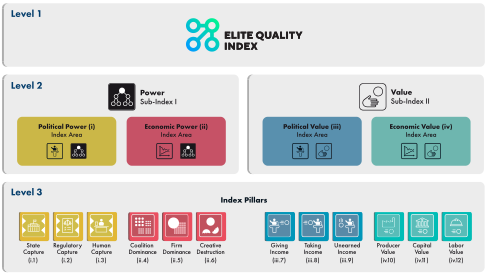
The Index is based on a 4-level architecture allowing for both an overall quantification of a country's EQx, as well as an in-depth analysis of specific political economy dimensions.
EQx STRUCTURE

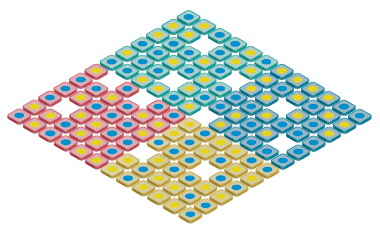

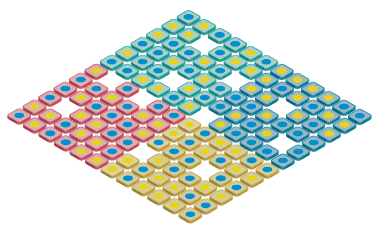
One composite EQx score summarises how a country's elites create or extract value.
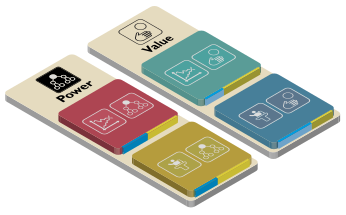
Four index areas split Power and Value across political and economic dimensions.
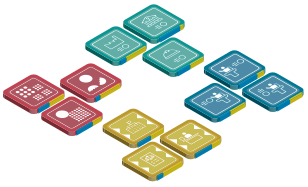
Twelve pillars group the core mechanisms behind elite power and value creation.
148 indicators provide the datasets that feed the pillars and final EQx score.
Level 1: EQx Index
What is the concept behind our Index?
The EQx is an internationally comparative measurement of elite quality. Built on a structured, multi-level framework that captures how power is exercised—toward value creation or extractive rent-seeking. The EQx aggregates evidence of first-order value creation and second-order value transfers, collected at the indicator level, into a coherent characterization of a country’s political economy relative to the world.

Level 2: EQx Index Areas (x4)
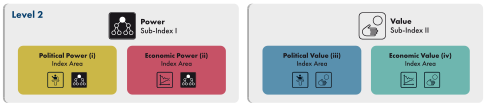
The Index can be divided in 2 Sub-Indices: Power and Value. Power is seen as a necessary condition for Value Extraction and rent seeking since Value Extraction business models require Power to operate effectively.
Both Sub-Indices in turn include a Political and an Economic Dimension. This yields 4 Index Areas: on the Power Sub-Index, Political Power (i) and Economic Power (ii); on the Value Sub-Index, Political Value (iii) and Economic Value (iv).
Level 3: EQx Pillars (x12)
The 12 EQx Pillars each capture a specific element of the Economic and Political Power/Value complex present in our countries. The purpose of the Pillars is to define and form conceptual lenses through which to examine the relevant parts of the political economy.

Political Power (i)
- State Capture (i.1)
- Regulatory Capture (i.2)
- Human Capture (i.3)
Economic Power (ii)
- Coalition Dominance (ii.4)
- Firm Dominance (ii.5)
- Creative Destruction (ii.6)
Political Value (iii)
- Giving Income (iii.7)
- Taking Income (iii.8)
- Unearned Income (iii.9)
Economic Value (iv)
- Producer Value (iv.10)
- Capital Value (iv.11)
- Labor Value (iv.12)
Level 4: EQx Indicators (x148)
Indicators are the underlying datasets from which the Index is constructed. The datasets are collected, conceptually validated and collated. They mainly come from renowned international organisations such as the World Bank, IMF, OECD, as well as other leading indices.
The EQx2026 is based on 148 Indicators. The new incorporation, adjustment and update of Indicators, as well as the elimination of unsatisfactory datasets, is a fundamental part of the ongoing EQx research project.
| COR | Political corruption | The chosen Indicator dataset "includes measures of six distinct types of corruption that cover both different areas and levels of the polity realm, distinguishing between executive, legislative and judicial corruption. (…) The measures thus tap into several distinguished types of corruption: both 'petty' and 'grand'; both bribery and theft; both corruption aimed at influencing law making and that affecting implementation" (V-DEM, website). | Political Power (i) | State Capture (i.1) | Value Extraction |
| COC | Control of corruption | The Control of corruption Indicator is derived from the World Bank's Worldwide Governance indicators (WGI) project that: "captures perceptions of the extent to which public power is exercised for private gain, including both petty and grand forms of corruption, as well as 'capture' of the state by elites and private interests" (World Bank, website). | Political Power (i) | State Capture (i.1) | Value Creation |
| OPG | Open government | Open government, a factor in the World Justice Project's Rule of Law Index, measures "the openness of government defined by the extent to which a government shares information, empowers people with tools to hold the government accountable, and fosters citizen participation in public policy deliberations. This factor measures whether basic laws and information on legal rights are publicized and evaluates the quality of information published by the government" (World Justice Project, n.d). | Political Power (i) | State Capture (i.1) | Value Creation |
| RTC | Government's responsiveness to change | Government's responsiveness to change is measured through an indicator included in the World Economic Forum's Global Competitiveness Index, which is based on the survey question: "In your country, to what extent does the government respond effectively to change (e.g. technological changes, societal and demographic trends, security and economic challenges)?" (WEF, website). The WEF Executive Opinion Survey captures the views of more than 16,000 business executives in 140 countries. | Political Power (i) | State Capture (i.1) | Value Creation |
| EPR | E-Participation Index | The E-Participation Index aims to measure the possibilities offered by governments to its to citizens to participate online; ranging from simply accessing information to engaging with and co-designing policies (UN, website) | Political Power (i) | State Capture (i.1) | Value Creation |
| PFD | Press freedom | Press freedom is measured by referencing the World Press Freedom Index and reflects the degree of freedom afforded to journalists in 180 countries. It is determined by pooling the responses of experts to a questionnaire devised by Reporters Without Borders (RSF). The questionnaire covers "pluralism, media independence, media environment and self-censorship, legislative framework, transparency, and the quality of the infrastructure that supports the production of news and information" (RSF, website). | Political Power (i) | State Capture (i.1) | Value Creation |
| NJK | Nr. of journalists killed per 1 million people (2yrs avg.) | NJK uses data from the Committee to Protect Journalists. It measures the number of a country's journalists killed, adjusted per million inhabitants. This Indicator includes all instances where journalists lose their lives, whether the death is connected to their professional life or not. This Indicator uses a two-year average. | Political Power (i) | State Capture (i.1) | Value Extraction |
| PDE | Political decentralization | Political decentralization examines the self-governance powers afforded to local governments and assesses the degree of decentralization at the legislative and executive levels, as well as the provisions for direct democracy (Ivanyna & Shah, 2014). | Political Power (i) | State Capture (i.1) | Value Extraction |
| ADE | Administrative decentralization | Administrative decentralization measures "the ability of local governments to hire and fire and set terms of employment of local employees as well as having regulatory control over own functions" (Ivanyna & Shah, 2014, p.17) | Political Power (i) | State Capture (i.1) | Value Creation |
| PGL | Political globalization | Political globalization is measured by using the political dimension of the KOF Globalization Index. It encompasses factors such as the number of embassies and international NGOs located in a particular country, as well as participation in UN peacekeeping missions. Moreover, it is comprised of variables relating to the membership of international/ multilateral organizations and international/multilateral treaties. | Political Power (i) | State Capture (i.1) | Value Creation |
INSIDE THE INDEX
EQx Methodology
EQx Ongoing Research Project
Concept Phase
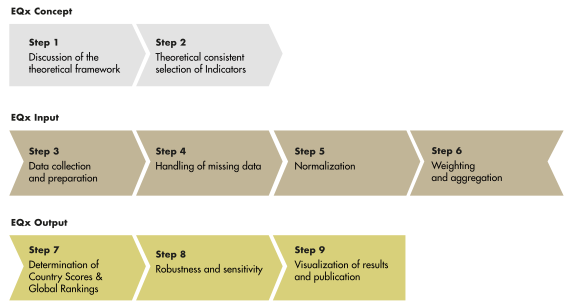
EQx constructs, architecture and theoretical aspects are developed in the initial 'Concept' phase (2 steps).
Input Phase
The 'Input' phase (4 steps) starts with the collection of the datasets underlying individual EQx Indicators. These are selected on the basis of a theoretical fit and culled from diverse sources.
Output Phase
The 'Output' phase (3 steps) sees the determination of the EQx Country Scores and Global Rank. The final phase includes statistical testing and validation, followed by the publication of results.
EQx HISTORY
Annual reports and rank shifts over time
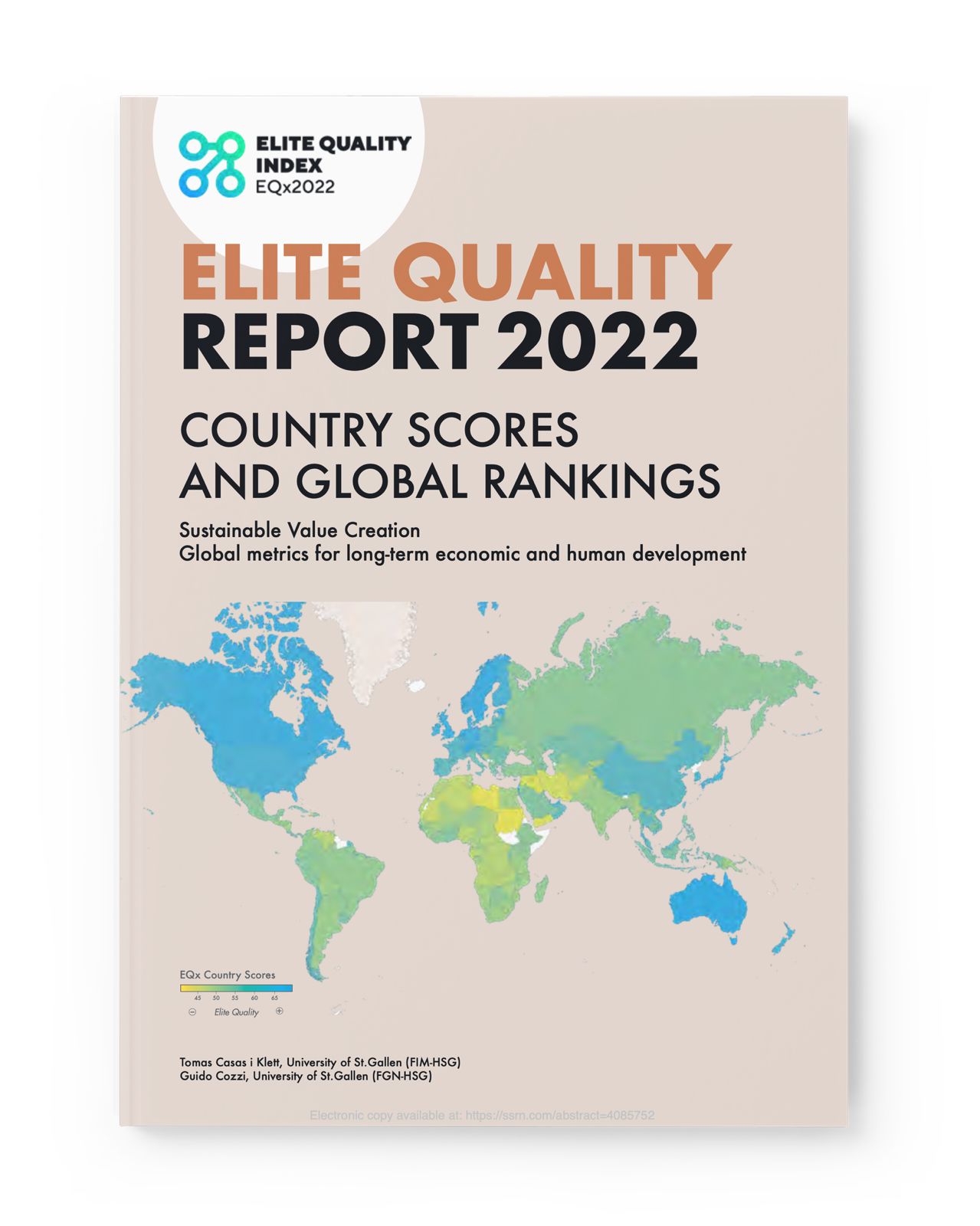
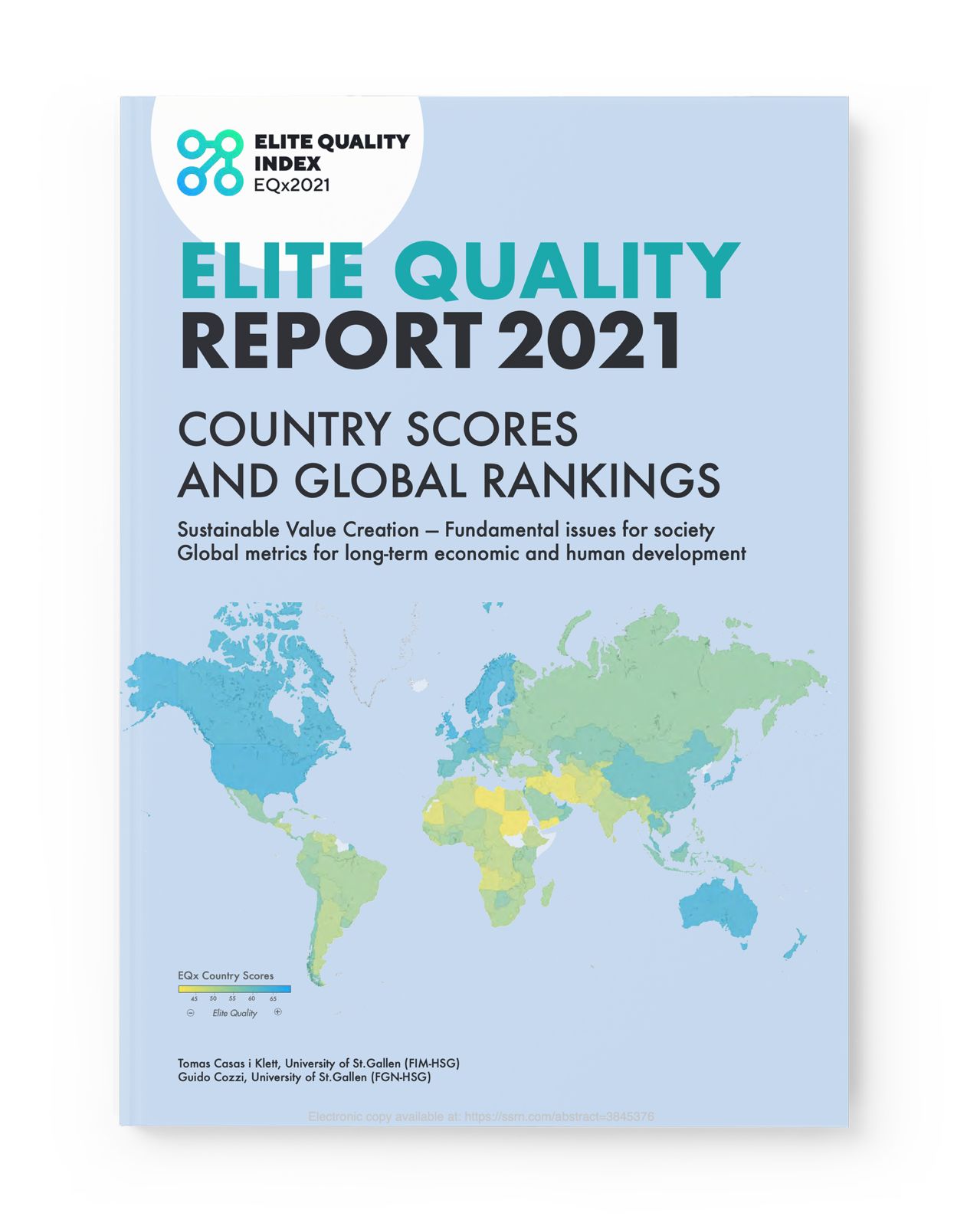
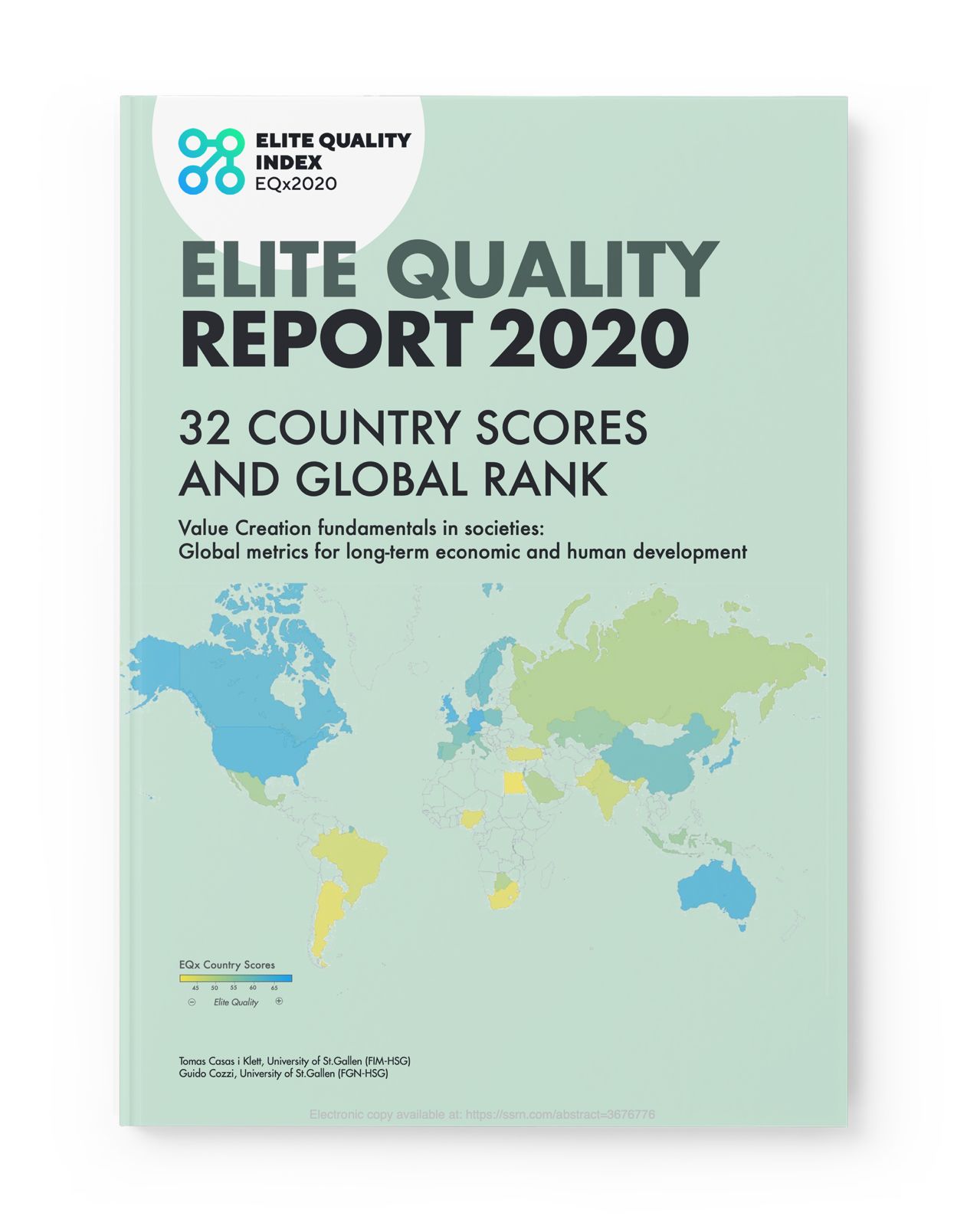
Historical EQx releases show how country positions move as the index expands its coverage, indicators and analytical depth. This view highlights selected rank changes between EQx2021 and EQx2026.
The full view uses the Excel rankings, keeping the original left-to-right history structure without collapsing every outside-top-20 movement into the same point.